What you will find here, and what you will not
These pages explain. They describe the general state of the art and the applicable body of rules, with number, edition date and a full reference list, so that you can look up every statement and disagree with us.
They do not advise. Which product is right for your machine, your make-up water and your process chain is decided on process data and on a trial. That step is taken by our application engineering team with you, not by a text.
And they are not advertising space. On each of the four pages the product section sits after the technical part, names the product family and says what it was made for. The technical part before it has to be correct and useful without our products.
The four subjects
Each article stands on its own and can be read in one go or used as a reference. If you know what you are looking for, go straight in. If you do not, the section below helps: it is sorted by question rather than by product.

Metalworking
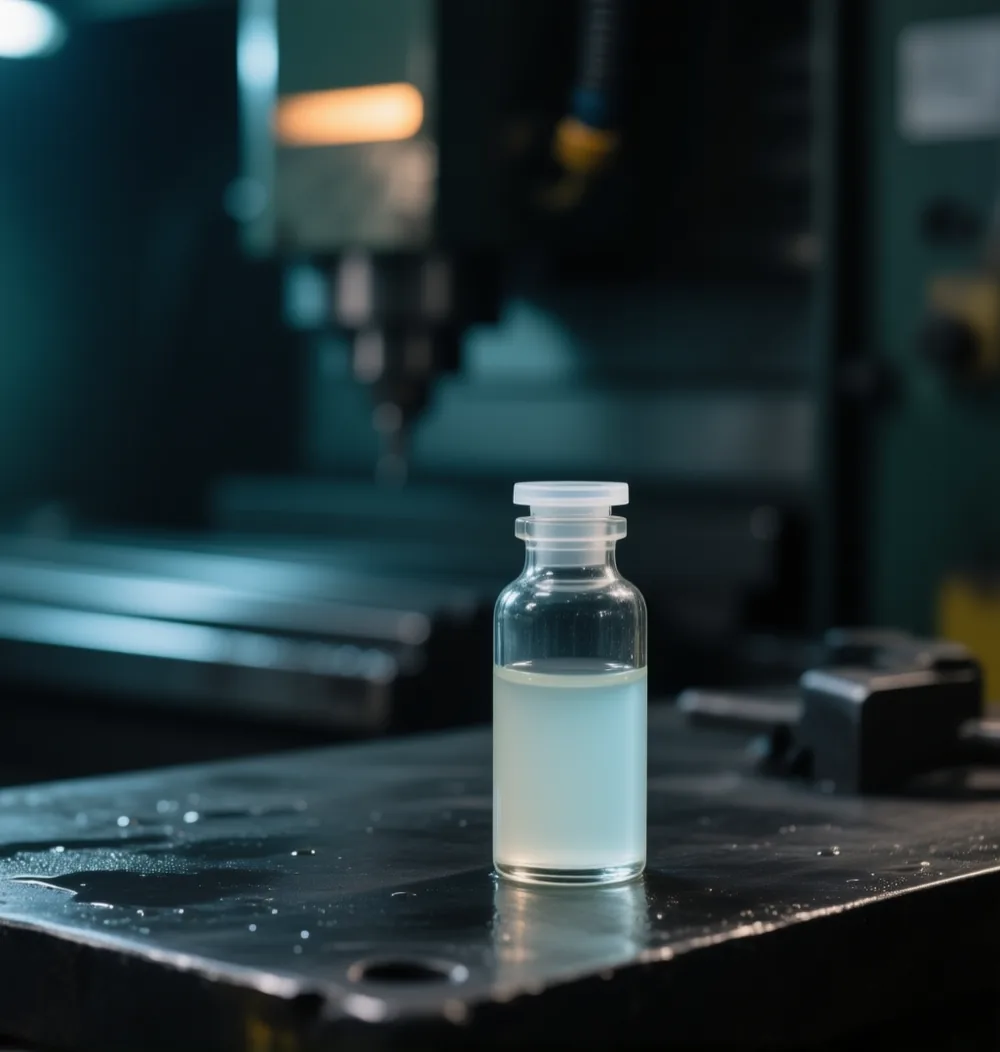
Water cools, oil and additives lubricate. Every emulsion is therefore a compromise that you set up and keep adjusting rather than choose once. Tool life, dimensional accuracy and skin exposure are governed by four measurable parameters: working concentration, pH value, nitrite content and tramp oil ingress. The article also takes apart three widely repeated statements that are wrong or incomplete.
With a complete monitoring plan based on the German TRGS 611 and the model test plan of DGUV Rule 109-003, plus a decision path: which finding triggers which action.
Read the article →
Fully synthetic MWF
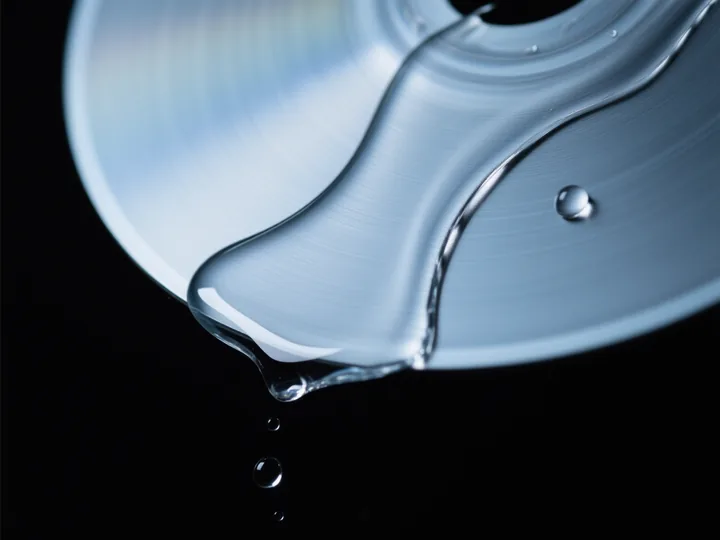
“Fully synthetic” is a market term, not a term defined by any standard: the concentrate forms a solution with water instead of an oil-in-water emulsion, and lubrication comes from polar additives rather than oil droplets. That changes the view into the sump, the foam and residue behaviour, the handling of tramp oil and the load limit. How much it changes is decided by the additive package, the make-up water and the plant, not by the class.
With a compatibility plan for the changeover: seven questions to be answered from the plant, the laboratory and the supplier before you switch.
Read the article →

Corrosion protection
Corrosion after machining is not a material defect. It is an electrochemical reaction that needs bare metal, oxygen and a thin electrolyte film of condensed humidity. Success is therefore decided by the whole chain of residual water, application method, packaging and transport route, not by the protective medium alone. And a protection period stated without its conditions is not a statement at all.
With a five part plan for qualifying a protection period, and storage situations ranked through the corrosivity categories C1 to CX of DIN EN ISO 9223.
Read the article →
Mould release agents
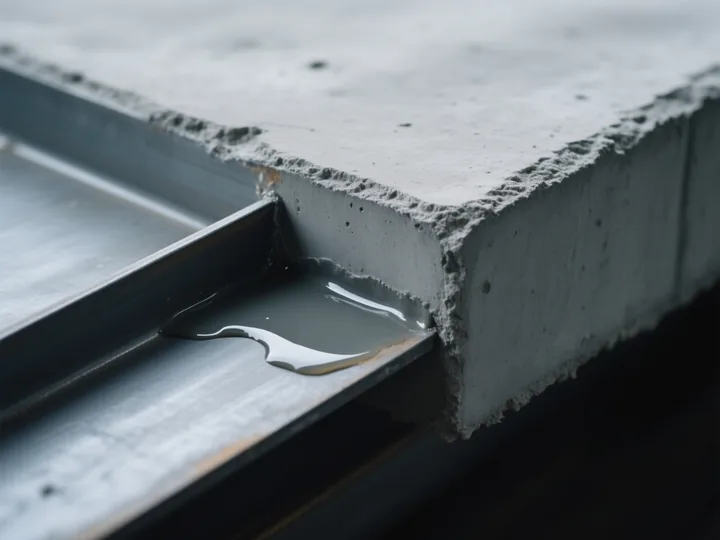
A release agent does not work because it greases. It works because it places a layer between mould and part that is weaker than either side and fails first on demoulding. Success or failure almost never turns on the question of which product, but on whether that film is closed, thin and even, and whether it has flashed off before the mould is filled. For concrete, ceramics and brick these are three different technical tasks that share a name.
With a fault pattern matrix: which pattern points to over-application, under-application or build-up, and in which order to check.
Read the article →
Where do I start?
Sorted by the question, not by the product. Six entry points as they are actually raised on the shop floor, each with the place where the answer sits.
Why does our emulsion keep going off?
Because a water-mix sump is alive, and because four parameters decide how long it holds: working concentration, pH value, nitrite content and tramp oil ingress. Tramp oil is the main offender here, not the side issue it is usually taken for. The article takes each parameter separately, with interval and action threshold, and closes with the decision on when to top up, partially change, fully change or clean the system.
Metalworking: the monitoring plan →
We measure nitrite. At what level do we have to act?
The common shorthand that 20 milligrams per litre is “the limit” is incomplete. The German TRGS 611, edition May 2007, sets out four steps with different consequences, and the model test plan of DGUV Rule 109-003 states the interval at which you check. Both are on the page as a table, together with what nitrite in the sump actually means.
Metalworking: nitrite and nitrosamines →
We want to switch to a mineral-oil-free sump. What has to be settled first?
Seven points whose answers come from the plant, the laboratory and the supplier, not from a product name. That includes the insight that a changeover is first of all a cleaning job, and a set of criteria by which you release the first weeks of operation. Note as well: “mineral-oil-free” is a statement about composition, not an exemption from TRGS 611, skin protection and documentation.
Fully synthetic MWF: compatibility plan and changeover →
Our parts travel by sea container. How long will the preservation hold?
That cannot be answered without conditions. The same preservation that holds for a year in a climate-controlled indoor store can fail within weeks in a sea container crossing the equator. Hours from a salt spray test are a ranking figure in the laboratory, not a storage time in the plant. Instead, the article shows how to qualify a protection period in five steps, ranks storage situations through the corrosivity categories C1 to CX of DIN EN ISO 9223, and treats sea freight as a statement that has to be specified separately.
Corrosion protection: qualifying a protection period →
The protective film has to come off again before painting or bonding.
Then film type and downstream process belong together in the same decision, taken before preservation rather than after it. The most expensive mistake in this chain is a film that does not come off reliably, because it only shows up far downstream, when the value added is already in the part. The article also covers the opposite case: a layer that seals moisture in instead of keeping it out.
Corrosion protection: film type and downstream process →
We are getting blowholes and staining on our fair-faced concrete.
In most cases there is too much release agent on the mould, not too little. Excess produces exactly the blowholes, staining and dusting that it was meant to prevent. The fault pattern matrix on the release agent page assigns the pattern to a direction and names the order in which we would check.
Mould release agents: fault pattern matrix →
Films on these subjects
Eighteen short films belong to this section. Where one fits a passage, it sits there in the article; all of them together are in the media library. The explanatory series Inside the Cut takes one question from machining per episode, such as what happens at the contact zone or what wear patterns reveal about the process. The category films sum up a range in thirty seconds.
Two notes so that you know what you are clicking on. First, the films have an English voice track, and English subtitles exist for some of them. A written version sits below each film so that the content is available without sound. Second, every film carries its AI disclosure directly below it: seventeen of the eighteen contain AI-generated visual simulations, one consists of real factory footage that was edited and extended with AI tools.
About these pages
As at 09 August 2026. Published by Voitländer-International GmbH, Kronach, Germany.
On sources: each of the four articles closes with a numbered reference list giving the edition date and the date of access, and every section carries an evidence line stating what it rests on. The editions of the rules cited were verified on 09 August 2026. Rules age, however: if you need a figure for a decision, check its edition on the day of that decision. Where a statement varies with conditions, the condition is stated in the text; where something is disputed or unproven, it is not on the page at all. Several of the rules cited are German. Where an international standard covers the same ground, it is named alongside.
Not a substitute for your risk assessment.
These pages describe the general state of the art and the applicable body of rules. They do not replace the risk assessment required under section 6 of the German Hazardous Substances Ordinance (GefStoffV) and TRGS 400, nor the operating instructions, staff instruction, or any product-specific approval. For each product, the current safety data sheet and technical data sheet prevail, together with the arrangements in force at your site. Responsibility for selection, operating conditions, monitoring and documentation rests with the employer.
Next step
Your case deserves to be looked at, not inferred
Process, material, make-up water, plant and downstream operation together produce the recommendation. Send us your process data or book a consultation. You will get a clear answer from us even when our products are not the right ones for your case.